Page 1 of the original document
Muscle cramps/leg cramps. General information. (V2) What is a muscle cramp? - A muscle cramp is a painful contraction of a muscle in the leg (thigh and/or calf). It may last for several minutes or only a few seconds. It is thought that about 60% of people experience leg cramps at night, most commonly people older than 50 years. A leg cramp may wake people from sleep and cause sleep disruption. What causes muscle cramps? - By far the most common situation is that the physician finds no cause for the cramp. It is thought that the cause may be a combination of muscle fatigue, nerve dysfunction, and/or an electrolyte imbalance in the body (potassium, calcium, magnesium). If the physician finds the cause of the symptoms, it may be:
- Abnormal body position, e.g. flat feet, knee misalignment, or deformity of the foot/ankle
- A difficult/uncomfortable sitting position, or prolonged standing or walking on a hard surface
- Changes in the body's fluid balance/dehydration/thirst, which may be due to diuretics, dialysis, heavy sweating, or exercise
- Certain diseases such as Parkinson's disease, diabetes, or hypothyroidism, vascular disease, cirrhosis, and spinal canal stenosis.
- Pregnancy - some pregnant women have low blood magnesium, which may cause muscle cramps
- Medications such as those for hypertension, high blood lipids, or psychiatric conditions. For example, this is common with Forsteo (a medication for osteoporosis). Can I do anything to feel better? - Yes, what you can do is:
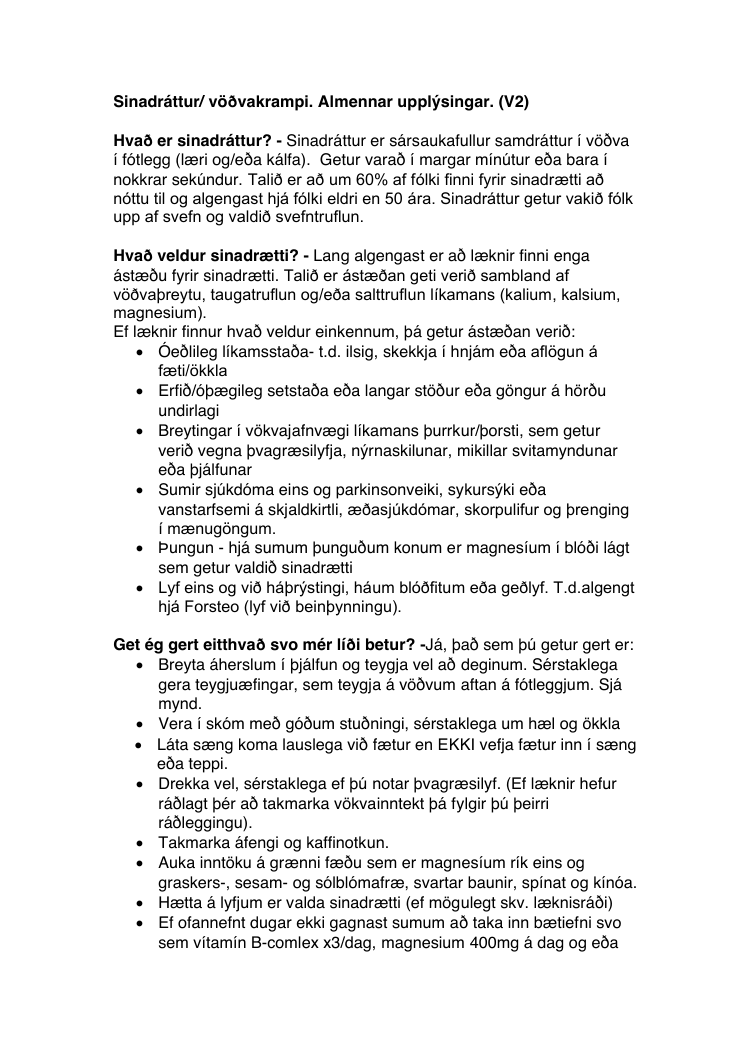
- Change the focus of your exercise and stretch thoroughly during the day. In particular, do stretching exercises for the muscles at the back of the legs. See illustration.
- Wear shoes with good support, especially around the heel and ankle.
- Let the duvet rest loosely against your feet, but DO NOT wrap your feet in a duvet or blanket.
- Drink plenty, especially if you use diuretics. (If your physician has advised you to limit fluid intake, follow that advice.)
- Limit alcohol and coffee intake.
- Increase your intake of green foods rich in magnesium, such as pumpkin, sesame, and sunflower seeds, black beans, spinach, and quinoa.
- Stop medications that cause muscle cramps (if possible according to your physician's advice).
- If the above is not enough, some people benefit from taking supplements such as vitamin B-complex x3/day, magnesium 400mg per day, and/or
View the original page and images
Page 2 of the original document
vitamin B-12 2000 micrograms. Inform your physician if you use alternative medicines.
- Consider ways to improve sleep with medication or otherwise. If you get a muscle cramp, you can stretch your calf by pulling your toes toward your shin with your knee straight on the same side, and massage the calf. To prevent further cramping, you can:
- Walk around, or alternate standing on your toes and heels.
- Lie down and raise your legs in the air.
- Shower and spray hot water on the tense muscle, or take a hot bath.
- Massage the tense muscle with ice wrapped in a towel. Should I see a physician? - You can discuss it with a physician if muscle cramps occur often at night, keep you awake, are painful, or the muscle contractions occur somewhere other than the legs. It is important to distinguish the symptoms from other leg conditions such as restless legs syndrome, arterial narrowing, muscle or peripheral nerve diseases. Are any tests needed? - Probably not. The physician will listen to your history and examine you, and then decide whether further tests are needed. What other treatment is available for muscle cramps? - In the past, everyone was given quinine for muscle cramps, but this medication is no longer first-line treatment because of side effects. Calcium channel blockers and anti-epileptic medications are now used, but they have side effects and their effectiveness is not supported by scientific studies.
Ólöf H Bjarnadóttir, neurologist, August 2019. Based on information from UpToDate 2015. University Health News August 2019
View the original page and images