Page 1 of the original document
Stefán E. Matthíasson dr. med. Diagnosis and treatment of surgical and vascular diseases Lágmúla 5, 108-Reykjavík, Tel.: 590 9200 www.laekning.is
Varicose veins and spider veins. What are varicose veins? Varicose veins are a disease of the veins. They are most common in the legs. The veins in the legs are divided into a superficial and a deep venous system. The superficial system is closer to the skin and usually consists of two main veins in the thigh and calf. It should be kept in mind, however, that there is some variation between individuals, and veins may be arranged differently without being abnormal in any way. The disease may affect the superficial or deep system, but it more commonly involves the superficial system or veins in or near the skin, often called spider veins (telangiectasia). Unlike arteries, veins have valves that control the flow of blood in one direction, from the limbs toward the heart. If these valves fail, blood flows backward, increasing pressure in the main veins. This in turn further weakens the supporting structure of their walls or side branches, and the veins widen and twist. This is what is commonly called varicose veins. The knots are often visible under the skin, and/or spider veins may develop in or just beneath the skin. Spider veins and varicose veins are essentially the same disease, but their appearance differs somewhat. Varicose veins and other vascular diseases: Varicose vein disease must be distinguished from other vascular diseases. There is no association between varicose veins and atherosclerosis, peripheral arterial disease, carotid artery disease, or arterial aneurysmal disease. The risk factors and symptoms are different. Lymphatic diseases are also a separate group of diseases. Appearance:
- Telangiectasia (spider veins ≤1mm)
- Reticular veins (coarser spider veins ≤3mm)
- Varicose veins (>3mm)
- Edema
- Venous eczema
- Skin discoloration
- Atrophie blanche (white scar tissue)
- Lipodermatosclerosis (change and thinning of the fatty tissue beneath the skin)
- Venous ulcers. Symptoms: Early symptoms:
- Minimal symptoms
o “Appearance-related distress”
- Irritation/restless legs/fatigue
- Sensation of heaviness/restless legs/muscle cramps
- Edema
- Itching/pain
- A sensation of heat where the varicose veins are. Later symptoms:
- Venous eczema. The layer of fat beneath the skin becomes thinner, but this is more common farther down the legs, from the ankle up to the calf. This is accompanied by an inflammatory response to persistently increased pressure in the veins, which causes skin changes. These may take the form of eczema, known as venous eczema.
- Itching. Over the varicose veins, and often a precursor to venous eczema.
- Skin discoloration. Deposits of oxidized iron (haemosiderin) from the blood can cause the skin to become permanently brownish.
- Bleeding. Bleeding can occur from varicose veins. It is usually easy to stop by applying pressure; seek help.
Varicose veins and spider veins. Page 1 of 9. This educational material is intended to inform interested readers. ©Stefán E. Matthíasson April 2015
View the original page and images
Page 2 of the original document
2
- Venous ulcers. Venous eczema can develop into ulcers if people scratch themselves. Tissue damage and skin discoloration may then become permanent, and the skin also becomes thinner, shiny, and sensitive. These ulcers can be difficult to treat and may attract infections.
- Blood clot/phlebitis. When varicose veins become prominent, blood flow through them slows down. This can contribute to phlebitis when the blood clots in them; it is characterized by warmth, redness, and pain in the knots, which become hard and tender to the touch. Treatment, but often anti-inflammatory medicines, medicines and ointment (Hirudoid®) x 3-4/day. [Wording incomplete in the original] Superficial phlebitis can increase the likelihood of blood clots forming in the main veins and deep venous system. This is a much more serious disease that requires immediate diagnosis and appropriate treatment with blood thinners and compression stockings, in part to prevent permanent damage and pulmonary embolism, a life-threatening condition. Causes of varicose veins: The causes are not precisely known, but several things provide clues:
- Family history. Varicose veins appear to run in families, but the pattern of inheritance is unknown. One study showed that the risk of varicose veins was as high as 90% if both parents had the disease, but 25-62% if one parent had the disease. 25% in men and 62% in women. If neither parent had the disease, the risk was <20%. However, the inheritance pattern is very inconsistent, and there is not enough knowledge to rely on it. Inheritance is nevertheless the greatest risk factor, and, understandably, nothing can be done about it.
- Valve defect. What happens in the vein is that pressure rises in it, known as pressure under load. This can be for two main reasons: either the venous valves become loose and leaky, or, more commonly, the supporting structure of the veins gives way and the vein widens. The valves play a very important role in the veins because there is no pump to transport blood to the appropriate places in the body, as there is in the arterial system, where the heart serves that function. In the venous system, skeletal muscles, among other things, press the veins together and empty them when those muscles are used. The valves ensure that blood moves slowly but steadily toward the heart. The valves ensure that pressure under load in the veins is normal; if they fail, pressure under load in the veins rises further and a vicious cycle begins. The veins contain more blood than they can handle; the volume and pressure increase, and the supporting structure of the veins gives way further. The veins become twisted: what is called varicose veins.
- Consequences of blood clots or injury. In some cases, there are other causes besides those mentioned above. The main ones are an injury that permanently damages the valves, or blood clots or phlebitis. The clot then lodges in these small valves and permanently damages them, with the consequences described above.
- Pelvic varicose veins in women. A proportion of women, 5-15%, may develop varicose veins because of valve dysfunction in the pelvic veins. There are mainly two veins involved, namely the ovarian veins (e. ovarical vein) and the internal iliac vein ( e. internal iliac vein). Valve problems in these veins can cause
Varicose veins and spider veins. Page 2 of 9. This educational material is intended to inform interested readers. ©Stefán E. Matthíasson April 2015
View the original page and images
Page 3 of the original document
3
symptoms in the pelvic floor and abdominal cavity, manifested as unusually severe pain associated with menstrual bleeding (e. Pelvic Vein Reflux or Pelvic Congestion Syndrome). Varicose veins may also develop on the labia or inner thighs that are not connected to the usual external venous systems of the legs. Diagnosis and treatment of this patient group require special attention and cooperation between a vascular surgeon and a gynecologist. Transvaginal ultrasound is necessary for diagnosis, in addition to the conventional diagnostic assessment. Treatment is often also different, using so-called endovascular treatment, in which the relevant veins in the pelvis are closed by catheterization using X-ray technology. This treatment requires admission to a hospital. Prevalence: It is estimated that 35-40% of people develop varicose vein disease during their lifetime, but in very different forms. It has been claimed that it is less common in men. On closer examination, there is little or no difference between the sexes. However, women appear on average to develop varicose veins earlier in life than men. This sex difference is thought to be related to female hormones and women's pregnancies, which hasten the symptoms but are not, by themselves, a cause. Varicose veins are partly a “disease of civilization” and partly related to lifestyle. They are more common in the West than in many other parts of the world. The reasons for this, however, are poorly understood. Lifestyle and prevention: Over the years, many well-intentioned home remedies have been suggested, but many are myths and it is difficult to find any basis for them in reality.
- Body weight. Weight gain does not necessarily lead to the development of varicose veins, unless there is severe obesity. Increased body weight does, however, hasten symptoms in people who already have the disease. Repeated changes in body weight appear to speed up the disease and its symptoms.
- Height. Many studies indicate some association between height and the risk of varicose veins. This is more apparent in men than in women, as tall men are more likely to develop varicose veins. However, research on this is inadequate to draw reasonable conclusions. Increased height is probably only a contributing factor that hastens the development of the disease.
- Tight clothing/crossing the legs. It is difficult to find support for the idea that tight clothing causes varicose veins or that people who cross their legs are more likely to develop them. However, it is likely that people who already have prominent varicose veins experience more discomfort when sitting with their legs crossed for a long time, since this position may reduce venous return and thereby cause symptoms.
- Standing. It is doubtful that people who stand a lot, e.g. at work, are at greater risk of developing varicose veins. Standing for long periods may possibly speed up their development and certainly aggravates symptoms in those who already have the disease.
- Hormonal medicines. Medicines such as the contraceptive pill/hormonal IUD and other female hormones aggravate the disease in those who already have it and speed up symptoms. Symptoms often become more severe after taking hormones. The pill is not, however, contraindicated when the disease is present. Symptoms from varicose veins are usually worst in women around the time of menstruation because of the effects of hormones.
- Exercise. People with varicose veins often feel better if they
Varicose veins and spider veins. Page 3 of 9. This educational material is intended to inform interested readers. ©Stefán E. Matthíasson April 2015
View the original page and images
Page 4 of the original document
4
move around. During movement, the muscles in the legs become more active. The veins empty more effectively, and symptoms caused by excessive pressure under load decrease. Exercise is therefore unquestionably beneficial. Sitting still with the legs hanging down at a desk, in a car, or on a flight often increases discomfort. Knee-high compression/support stockings help reduce symptoms but do not stop the disease itself.
- Have your children first! A common claim is that women should not undergo treatment for varicose veins until they have finished having children. This may stem from the fact that varicose vein disease often worsens during pregnancy because of hormonal effects. However, there is no support for delaying treatment. A vein that is already diseased will only get worse if treatment is postponed, often requiring a more extensive intervention than otherwise and causing skin changes that do not reverse.
- When and which varicose veins should be treated? All varicose veins should be treated sooner or later. Investigations: Before starting treatment, it is necessary to know the extent of the disease, its location, the condition of the valves in the main veins, and more.
Surgery should never be performed without an adequate assessment of the venous system. Veins are not arranged the same way in everyone. There is considerable variation in the venous system between individuals. The information being sought is whether the valves in the veins are functioning properly and, if not, where they are failing, as well as mapping the extent of the disease and possible other causes. This is the key to good and successful treatment. Main investigations:
- Interview and examination. Symptoms, risk factors, and family history are reviewed, and a general examination is performed.
- Doppler examination. Doppler is a simple form of ultrasound that can be used to assess the condition of the main valves and determine the location and extent of the disease. It is also used to assess whether arterial disease is present at the same time.
Doppler examination alone is an inadequate diagnostic assessment before surgery.
An ultrasound examination is also required.
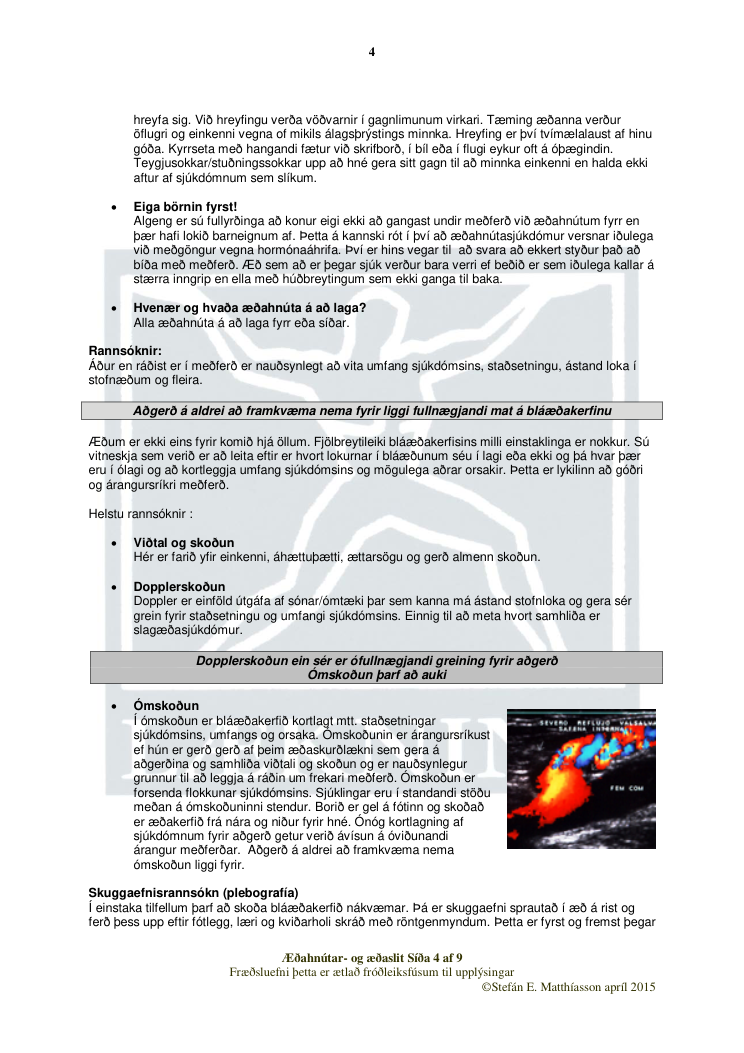
- Ultrasound examination. The venous system is mapped by ultrasound with regard to the location, extent, and causes of the disease. Ultrasound is most effective when performed by the vascular surgeon who will perform the procedure, together with the consultation and examination, and is an essential basis for planning further treatment. Ultrasound is required to classify the disease. Patients stand during the ultrasound examination. Gel is applied to the leg, and the venous system is examined from the groin down to below the knee. Inadequate mapping of the disease before surgery may result in an unacceptable treatment outcome. Surgery should never be performed unless an ultrasound examination has been carried out. Contrast imaging (plebografía). In certain cases, the venous system needs to be examined more closely. Contrast medium is then injected into a vein on the top of the foot, and its movement up the leg, thigh, and abdominal cavity is recorded using X-ray images. This is primarily when
Varicose veins and spider veins. Page 4 of 9. This educational material is intended to inform interested readers. ©Stefán E. Matthíasson April 2015
View the original page and images
Page 5 of the original document
5
when a more serious defect is suspected, following a blood clot, or if damage to the venous system above the groin is suspected. Treatment. Most often, the symptoms are visible in the superficial system, and many people consider them unsightly in addition to the discomfort mentioned earlier. There is nothing wrong with consulting a doctor for advice if spider veins and varicose veins are visible. It is then possible to determine the stage of the disease. The doctor's conclusion may be to do nothing for now or to start treatment. Treatment is primarily surgery or injection treatment, but compression stockings and various medicines have been used for side effects of the disease or temporarily to reduce symptoms. Medicines:
- Diuretics may be used for a short time if edema is present. Long-term use is not advisable.
- Hjartamagnýl® (e. aspirin) 75mg/day may speed the healing of venous ulcers if present. It also has a mild blood-thinning effect.
- Antibiotics should be limited to cases of confirmed infection (erysipelas) following venous eczema or an ulcer.
- Steroid ointment may be used on venous eczema. It relieves itching and skin changes. Use should be limited and combined with other treatment, such as compression treatment with the appropriate compression stockings.
- Herbal remedies. Horse chestnut extract (e. horse chestnut seed extract, lat. aesculus hippocastanum) constricts veins and reduces edema and swelling in patients with advanced disease. It also has a mild diuretic effect. It has been widely used when compression treatment cannot be used for some reason. Dosage: 300 mg (50 mg of escin, the active ingredient) X 2/day for 2-12 weeks. Note that a purified product should be used. The raw material contains esculin (hydroxycoumarin), which can cause bleeding if it is not separated out during the manufacturing process. Hydroxyethylrutoside (Daflon®) is a medicine that is not marketed in Iceland, but many people buy it abroad. It has effects similar to horse chestnut extract. It reduces swelling, edema, and symptoms of the disease. It is a well-studied herbal medicine that is well tolerated while being taken. It is also considered useful for lymphedema and hemorrhoids. Dosage: 1 tablet (500 mg) X 2/day.
- Trental® (pentoxifylline) 400 mg x 2-3/day is a medicine registered in Iceland for use in atherosclerosis of the legs. The medicine has been used to speed the healing of venous ulcers when compression treatment cannot be used for some reason.
- Medicines with limited efficacy. Antibiotic ointments, caustic enzymes, growth factors, and Flamazine® cream (1,0 % silver sulfadiazine) have not been shown to be beneficial. Surgery or injection treatment. Treatment today varies according to the circumstances and symptoms of the disease. The disease is often classified according to symptoms, and treatment is linked to that classification. The most commonly used system is the CEAP classification (Clinical Etiologic Anatomic Pathophysiologic classification), in which the disease is divided into different stages, from Class 0-6:
- Class 0: No external signs or symptoms of venous disease
- Class 1: Spider veins, varicose veins under 3 mm
- Class 2: Varicose veins without symptoms
- Class 3: Varicose veins with edema but no skin changes
- Class 4: Varicose veins with various skin changes
- Class 5: Varicose veins with healed ulcers
- Class 6: Varicose veins with open ulcers. Surgery. For decades, surgery on varicose veins in the legs was the most common form of procedure. This is outpatient treatment, and patients go home the same day. The procedure is performed under tumescent anesthesia, with
Varicose veins and spider veins. Page 5 of 9. This educational material is intended to inform interested readers. ©Stefán E. Matthíasson April 2015
View the original page and images
Page 6 of the original document
6
or, as appropriate, without anesthesia. The long-term results of procedures vary and depend on the type and extent of the disease and on whether an adequate examination and investigation were performed before surgery. Conventional surgery is not the preferred treatment for varicose veins today and should be avoided except in exceptional cases. Ablation:
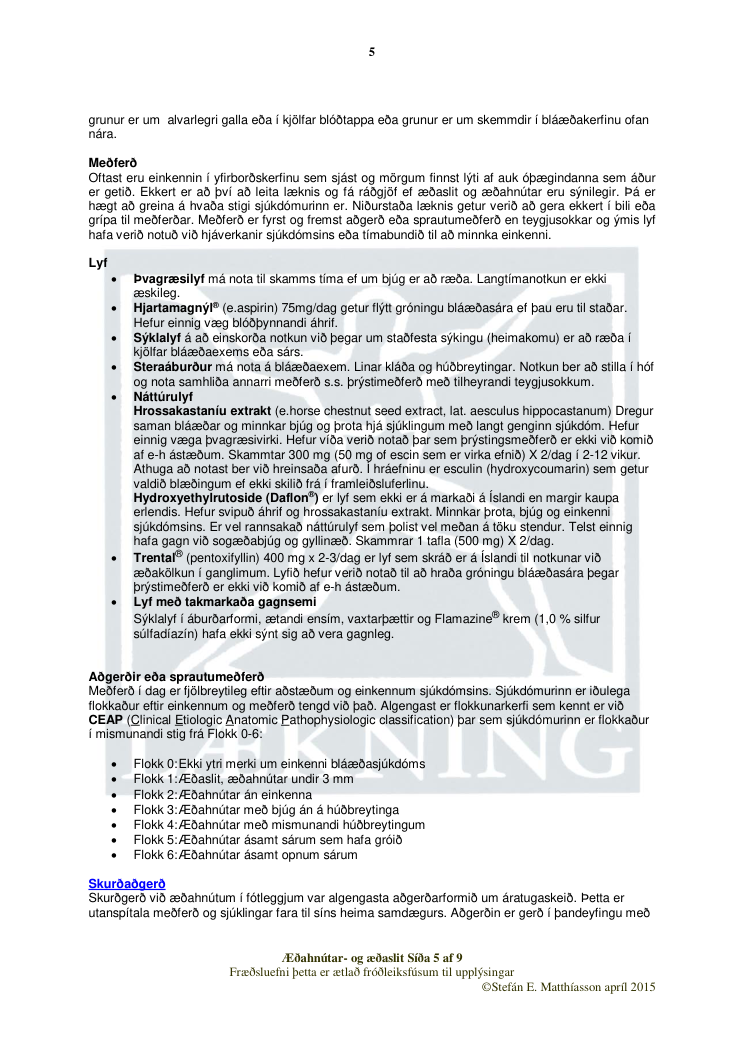
In recent years, new types of procedures have been introduced. The main one is “ablation,” used on the superficial main veins in the thigh or calf when the disease is caused there. The vein is burned from the inside using an intravascular guidewire technique with microwaves or a laser, which heat the vein to 100- 120°C and close it along with its side branches. This procedure is performed on its own, but often together with a procedure in which larger side branches are removed using a kind of crochet hook through needle punctures. This replaces removal of the main vein by conventional surgery and avoids an incision in the groin/knee crease, leaving much less scarring. This treatment is more expensive than old-fashioned conventional surgery, but its long-term outcome is considered much better than that of conventional surgery. This procedure is performed under tumescent anesthesia (e. tumescent anaestesia), in which the surgical area is anesthetized with a cooled saline solution. The main advantages of this tumescent-anesthesia technique are that patients do not need general anesthesia. The technique can be used in older people who would otherwise need general anesthesia for surgery. It is also painless. There is less bleeding, less bruising, and less pain after the procedure. It should be kept in mind, however, that the above depends on the extent, location, and nature of each individual's disease. In the right hands, the benefit of this treatment over conventional surgery is considerable, and with improved equipment and experience with this treatment technique, its use has grown. It is now recognized by most health authorities and professional associations as better than conventional surgery. The undersigned recommends this treatment as the first treatment option where possible. Patients must keep in mind that treatment aims to correct what has gone wrong. It does not correct the underlying cause of the disease, which is poorly understood. Therefore, it is never possible to promise that a person will not need another procedure or treatment later in life. It is not advisable to delay surgery if it is considered justified. It should be kept in mind that the earlier the disease is assessed, and if the valves in the main veins are leaking, the more the condition will worsen over time. The cosmetic outcome is always worse when there are extensive knots or treatment has been delayed excessively. Treatment early in the course of the disease generally gives a better long-term cosmetic result. Ablation is used for CEAP classes 3-6. At Skurðstofan ehf., the latest type of laser is used for this treatment, the Ceralas™ E-1470 nm laser, together with the most advanced ultrasound equipment available from General Electric. Compression stockings. Compression stockings are useful for reducing symptoms. They do not, however, prevent varicose veins from developing. They are also necessary when there are skin changes, venous eczema, or ulcers. They provide support and thereby reduce the pooling of blood in the leg veins and prevent edema. This makes discomfort from varicose veins less than it would otherwise be. There are several types of compression stockings, which may be:
- Support stockings. The most common type of support stocking is the “flight sock,” which reaches up to the knee and provides mild support. Knowing your shoe size is sufficient to obtain a suitable stocking at a pharmacy.
- Compression stockings. These are custom-fitted for each person and are classified according to an international system into 4- 5 classes (CCl I-V), depending on the pressure they provide. Each
Varicose veins and spider veins. Page 6 of 9. This educational material is intended to inform interested readers. ©Stefán E. Matthíasson April 2015
View the original page and images
Page 7 of the original document
7
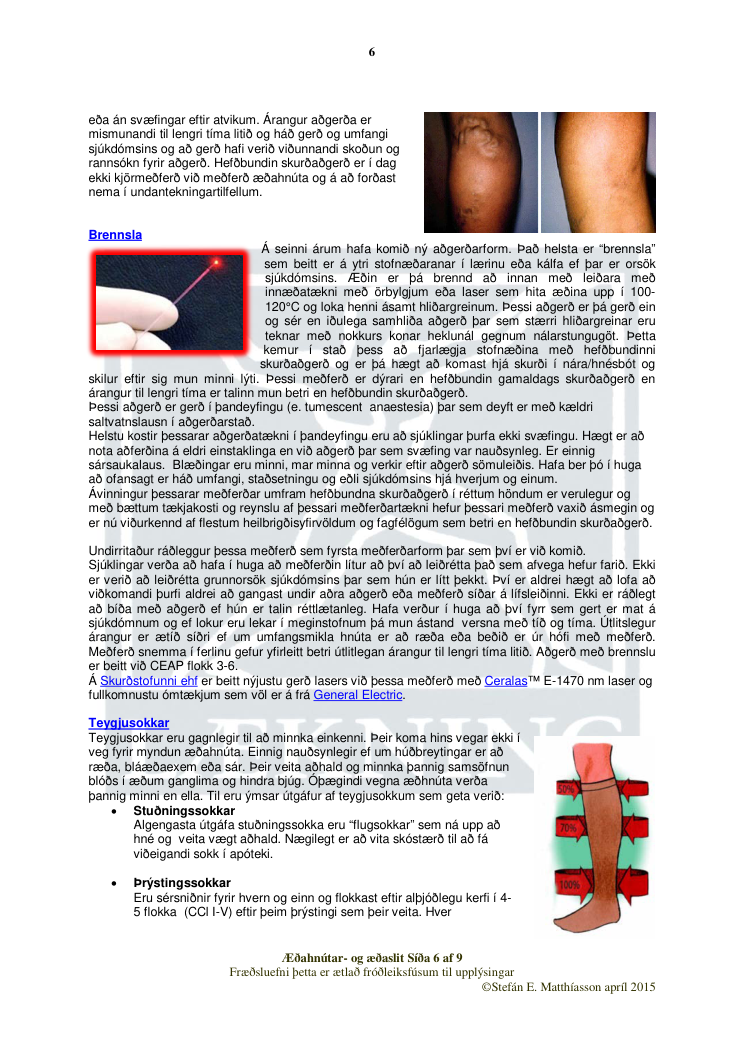
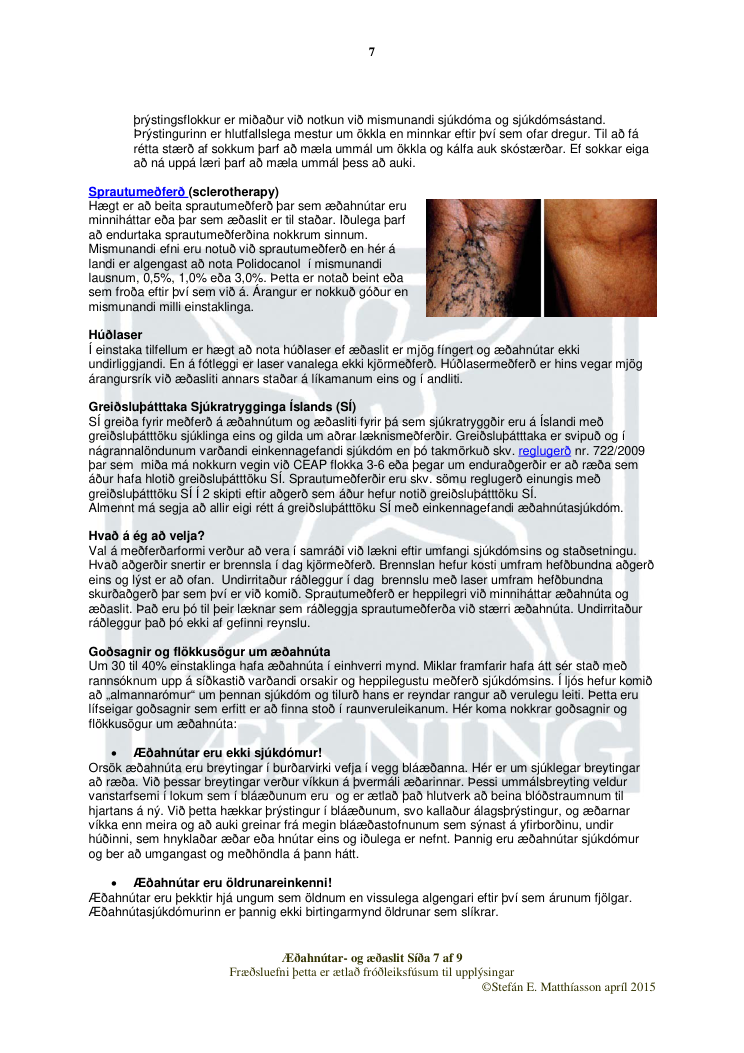
pressure class is intended for use with different diseases and disease conditions. The pressure is proportionally greatest around the ankle and decreases farther up the leg. To obtain the correct stocking size, the circumference of the ankle and calf must be measured, in addition to shoe size. If the stockings are to reach the thigh, its circumference must also be measured. Injection treatment (sclerotherapy). Injection treatment may be used for minor varicose veins or when spider veins are present. Injection treatment often needs to be repeated several times. Different agents are used for injection treatment, but in this country the most common is Polidocanol in different solutions, 0,5%, 1,0% or 3,0%. It is used directly or as foam, as appropriate. The results are fairly good but vary between individuals. Skin laser. In rare cases, a skin laser can be used if the spider veins are very fine and there are no underlying varicose veins. However, laser is usually not the preferred treatment for the legs. Skin laser treatment is very effective for spider veins elsewhere on the body, such as the face. Contribution toward costs from Sjúkratryggingar Íslands (SÍ). SÍ pays toward treatment for varicose veins and spider veins for people insured in Iceland, with patient contributions as applicable to other medical treatments. The contribution is similar to that in neighboring countries for symptomatic disease, but is limited according to Regulation no. 722/2009, which may generally be considered to apply to CEAP classes 3-6 or to repeat procedures that have previously received SÍ cost coverage. Under the same regulation, SÍ contributes toward injection treatments only on 2 occasions after a procedure that previously received SÍ cost coverage. In general, everyone with symptomatic varicose vein disease is entitled to a contribution from SÍ. What should I choose? The choice of treatment must be made in consultation with a doctor, based on the extent and location of the disease. For procedures, ablation is currently the preferred treatment. Ablation has advantages over conventional surgery, as described above. The undersigned currently recommends laser ablation over conventional surgery where possible. Injection treatment is more suitable for minor varicose veins and spider veins. However, some doctors recommend injection treatment for larger varicose veins. The undersigned does not recommend this, based on experience. Myths and misconceptions about varicose veins. Around 30 to 40% of people have varicose veins in some form. Considerable progress has recently been made through research into the causes and most suitable treatment of the disease. It has become clear that “common wisdom” about this disease and its origin is, in fact, largely wrong. These are persistent myths that are difficult to support in reality. Here are some myths and misconceptions about varicose veins:
- Varicose veins are not a disease! The cause of varicose veins is changes in the supporting structure of the tissue in the walls of the veins. These are pathological changes. These changes cause the vein's diameter to widen. This change in diameter causes the valves in the veins, whose function is to direct the flow of blood back to the heart, to malfunction. As a result, pressure in the veins rises (so-called pressure under load), and the veins widen further. In addition, branches from the main veins become visible on the surface, under the skin, as twisted veins or knots, as they are often called. Varicose veins are therefore a disease and should be treated as such.
- Varicose veins are a sign of aging! Varicose veins are seen in both young and old people, but are certainly more common as people get older. Varicose vein disease is therefore not a manifestation of aging as such.
Varicose veins and spider veins. Page 7 of 9. This educational material is intended to inform interested readers. ©Stefán E. Matthíasson April 2015
View the original page and images
Page 8 of the original document
8
- Varicose veins are more common in women than men. In the past, it was claimed that the disease was more common in women than men. The basis for this claim was questionable and was more closely related to the fact that women were more likely than men to seek treatment. They were, and perhaps still are, more conscious of their health and more likely than men to seek advice sooner if they feel that something is wrong with their health. Current figures show that varicose veins are not sex-specific and are found in similar proportions among men and women. However, several factors mean that women seeking advice about varicose veins are younger on average than men.
- Pregnancy causes varicose veins! This is a persistent claim that can still be found in recently published health books. However, the claim is not correct and is based on a misunderstanding. Well-designed studies from 1990 onward, in which women have undergone ultrasound examinations before and after pregnancy, show that pregnancy aggravates disease that is already established but is not itself a direct cause. The reasons for this lie primarily in hormonal changes from the very beginning of pregnancy and the increased blood volume in the circulatory system of pregnant women as pregnancy progresses.
- Women should have their children first and then have their varicose veins treated! This is a misunderstanding based on the experience of people making this claim with the treatment methods that were common in the past. The main method for treating varicose veins was surgery in which part or all of the relevant main vein was removed. Disadvantages of this treatment method include the possibility of new blood vessels forming in the wound and contributing to recurrence of the disease. This does not happen immediately, but studies have shown that 5-8 years after surgery, most patients had symptoms of this phenomenon. Modern treatment of varicose veins using endovenous treatment, e.g. laser, appears to produce much better results in this respect. It is also worth bearing in mind that varicose veins swell during pregnancy, causing discomfort. In addition, the risk of phlebitis in varicose veins is much greater toward the end of pregnancy and immediately after pregnancy. Today, it is recommended that varicose veins be treated regardless of future plans to have children.
- Crossing your legs causes varicose veins! This is a common and persistent myth with no basis in reality. If it were true, everyone would develop varicose veins after daily activities in which we constantly bend and flex veins over joints, and pressure the calves and areas rich in veins through different body positions. Perhaps this claim stems from the fact that people with extensive varicose veins in and around the knee may experience pressure symptoms if they cross their legs, causing a temporary obstruction to blood flow from large varicose veins.
- Hot tubs and hot baths cause varicose veins! One of the functions of veins is to help regulate skin temperature. Widening of blood vessels in and near the skin promotes heat loss, while constriction reduces heat loss. Capillaries in the skin dilate during hot baths. The development of varicose veins has nothing to do with capillary dilation during hot baths. People with varicose veins can enjoy hot baths without worry.
- Varicose veins indicate poor circulation in the legs! Blood circulates through the legs by three routes. Arteries carry oxygen-rich blood to muscles and other tissues, where red blood cells deliver oxygen and absorb carbon dioxide instead. The veins return this oxygen-poor blood to the heart, which then sends it to the lungs, where carbon dioxide is exhaled and oxygen is taken up again. This is how blood circulates through the body's blood vessels. A small amount of blood plasma remains in the tissues as lymphatic fluid, which drains through the lymphatic system and eventually rejoins the veins in the upper chest. The term “poor circulation” is misleading and incorrect. There is no association between venous disease such as varicose veins and arterial or lymphatic diseases.
- Varicose veins are only a cosmetic problem and do not need to be treated! This claim is completely wrong and based on a lack of knowledge. If varicose veins or spider veins appear, an ultrasound examination must be performed. Ultrasound is the best investigation for identifying an underlying cause and is the basis for advising the person about what to do next. The disease should never be treated without an ultrasound examination. If one or more main veins are leaking, the disease will only worsen over time. 3-6% of these patients will develop venous eczema and/or
Varicose veins and spider veins. Page 8 of 9. This educational material is intended to inform interested readers. ©Stefán E. Matthíasson April 2015
View the original page and images
Page 9 of the original document
9
venous ulcers later if nothing is done. 1-7% develop phlebitis. Studies show that 90% of patients with leakage in a main vein have some symptoms of the disease. However, the symptoms develop gradually, which means that many people do not realize how the various issues are connected. The National Institute of Health and Clinical Excellence (NICE) in Britain issued detailed recommendations on the diagnosis and treatment of varicose veins (2013). These emphasize that everyone with even the slightest symptoms of the disease should be examined by a surgeon with specialist expertise in the field and have an ultrasound examination of the veins, and that those who truly have symptoms of the disease should receive appropriate treatment.
- Varicose veins always come back! It is worth bearing in mind that treating varicose veins corrects what has already gone wrong. The underlying cause of the disease remains untouched. Studies show that if a person is <45 years old, has reflux, and has varicose veins in the superficial thigh vein on one side, then there is a >30% chance of developing a similar disease on the other side in the coming years. Recurrence of varicose veins in the same surgical area is much less common today with endovenous treatment, such as endovenous laser, than it was with open surgery. However, it cannot be promised that endovenous laser surgery will remain effective for the rest of a person's life.
- Standing for long periods causes varicose veins! It has been claimed that varicose veins are more common in occupations that involve standing for a long time, such as hairdressers, teachers, bakers, and even surgeons. More recent studies have shown that this is not entirely true. However, standing aggravates disease that is already present, hastens symptoms, and makes the disease worse. Here, standing is not a cause but a contributing factor.
- Compression or support stockings prevent varicose veins from developing! Support stockings do not prevent varicose veins at all. Nor are they an adequate treatment for the disease. They may, however, be used to reduce symptoms while waiting for appropriate treatment and after treatment. Patients who have had blood clots in their legs should, however, use this equipment.
- Varicose veins are a family disease or hereditary trait! Varicose veins are not inherited from one person to another in any known way. This may possibly be a polygenic phenomenon, with environmental factors also playing some part. It can be said that this disease is largely hereditary, but it is difficult to say who will develop it and who will not. Inherited directly down the leg!
- Varicose veins are inherited from the mother! This claim has no basis in reality.
- Varicose veins cause blood clots! Varicose veins are an independent risk factor for blood clots in the deep veins of the legs and thus also for pulmonary embolism. It is much more common, however, for blood to clot in varicose veins and cause phlebitis, which is both painful and may contribute to a blood clot in the deep part of the venous system. Varicose veins themselves do not cause blood clots; rather, the underlying pathology of the disease is the risk factor.
- Excess weight causes varicose veins! Excess weight and obesity in themselves do not cause varicose veins. However, they promote their appearance in people who already have the underlying condition.
Varicose veins and spider veins. Page 9 of 9. This educational material is intended to inform interested readers. ©Stefán E. Matthíasson April 2015
View the original page and images