Page 1 of the original document
Methods to prevent chronic headache. Chronic headache is headache that has persisted for more than 3 months. The most common cause of headache is tension headache, followed by migraine or other less common causes. Can I do anything to feel better? - Yes, what you can do is:
1. Know your triggers. This is the most effective way to prevent
headache. 2. Keep a headache diary to learn your triggers and
their patterns. 3. Do not ignore a mild headache. Treating a mild headache helps
prevent a severe headache and migraine. 4. Keep sleep on a schedule. Changes in sleep patterns can cause
headaches, so getting enough sleep is important. 5. Stress and tension are 2 of the main headache triggers.
a. Plan ahead and do not cancel what needs to be done. b. Make use of stress-management courses or individual therapy. c. Regular aerobic exercise and walking reduce stress. d. Breathe deeply or do relaxation exercises. e. Maintain a balance between work and leisure. f. Caffeine fuels stress and tension. Use it wisely. g. If depression or anxiety is present, seek help. 6. Reduce strain and tension in your neck.
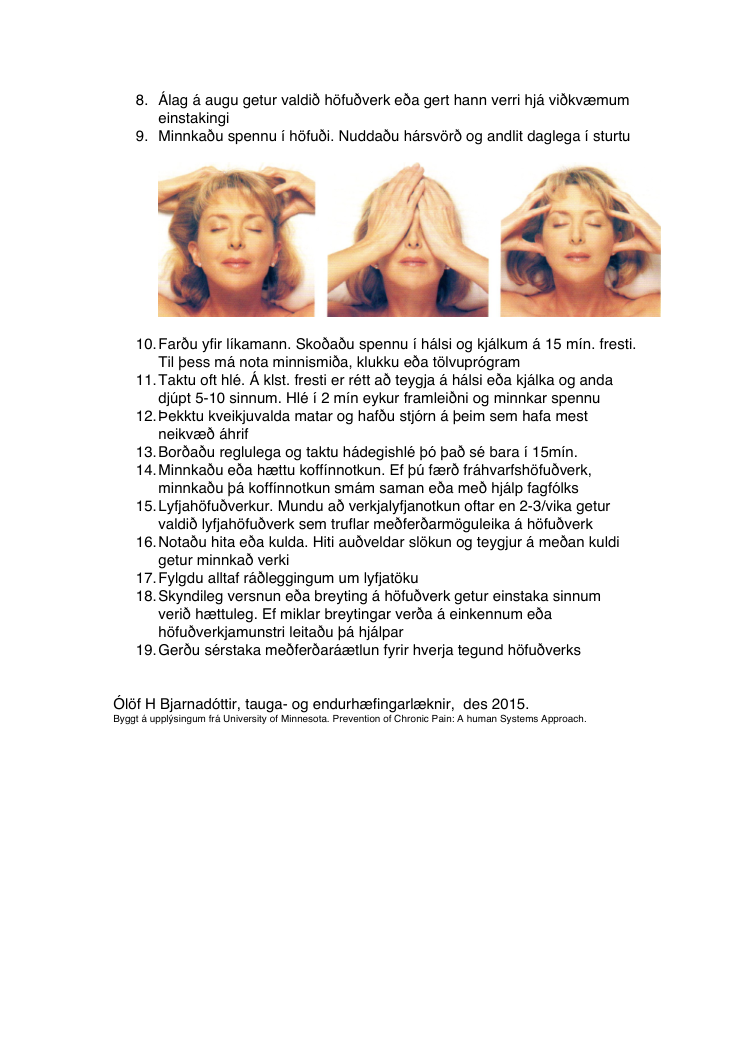
a. Sleep on your back or side so that your spine is straight. b. Set up your workstation correctly. Consider factors such as the screen, keyboard,
chair adjustment, back support, and hands-free equipment for your phone. c. Bifocal glasses can increase neck strain. d. Check your posture regularly, especially if your work
requires you to stay in the same position for a long time. Move around and stretch.
7. Reduce muscle tension in your jaw.
a. Your teeth should never touch. b. Your tongue should rest against the roof of your mouth and your teeth should be apart.
View the original page and images
Page 2 of the original document
8. Eye strain can cause headache or make it worse in a sensitive
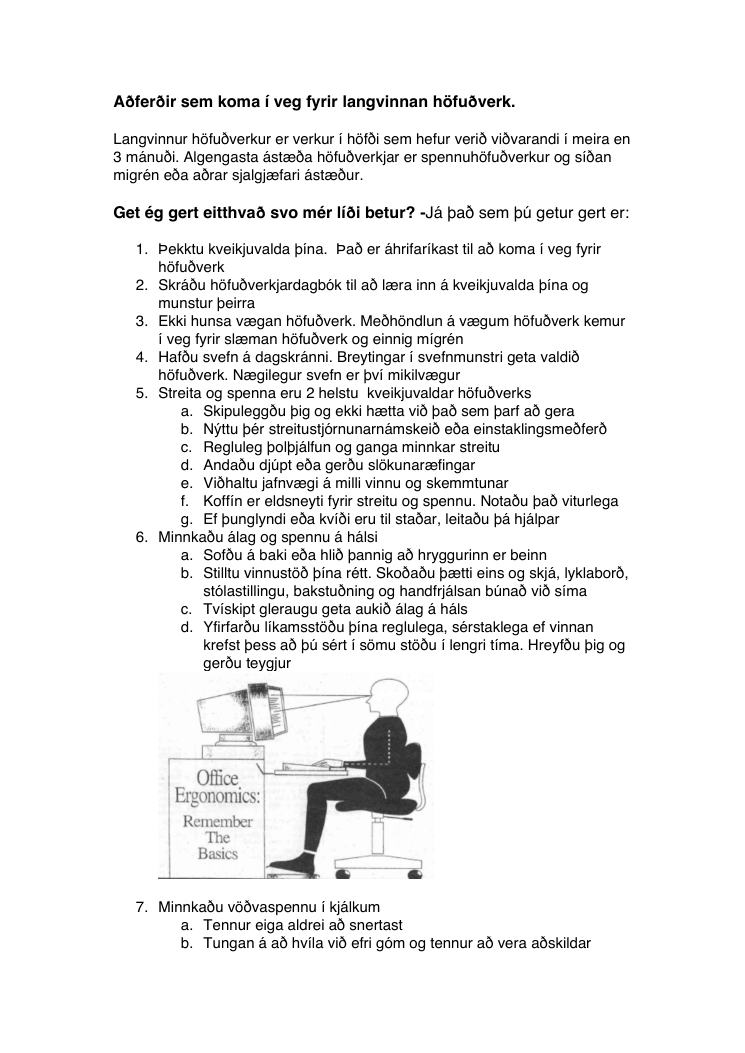
individual. 9. Reduce tension in your head. Massage your scalp and face daily in the shower.
10. Check your body. Check for tension in your neck and jaw every 15 min.
You can use a reminder note, a clock, or a computer program. 11. Take frequent breaks. Every hour, it is appropriate to stretch your neck or jaw and breathe
deeply 5-10 times. A 2 min break increases productivity and reduces tension. 12. Know your food triggers and control those that have the greatest
negative effects. 13. Eat regularly and take a lunch break even if it is only 15min. 14. Reduce or stop caffeine use. If you get withdrawal headache,
reduce your caffeine use gradually or with the help of a professional. 15. Medication-overuse headache. Remember that using pain medication more than 2-3/week can
cause medication-overuse headache, which interferes with treatment options for headache. 16. Use heat or cold. Heat helps relaxation and stretching, while cold
may reduce pain. 17. Always follow medication instructions. 18. Sudden worsening or change in headache can sometimes
be dangerous. If there are major changes in symptoms or headache patterns, seek help. 19. Make a separate treatment plan for each type of headache. Ólöf H Bjarnadóttir, neurologist and rehabilitation physician, December 2015. Based on information from the University of Minnesota. Prevention of Chronic Pain: A Human Systems Approach.
View the original page and images